


Olga de Amaral geldt als een revolutionaire figuur in de wereld van de textielkunst. Ze overstijgt de traditionele grenzen tussen ambacht en beeldende kunst met haar buitengewone en diep filosofische benadering van het weven. Geboren in Bogotá, Colombia, in 1932, heeft Olga de Amaral decennialang textielkunst getransformeerd van een louter decoratieve of functionele praktijk tot een diepgaand medium van artistieke expressie dat spreekt over culturele identiteit, spiritualiteit en de complexe relaties tussen materiaal, herinnering en menselijke ervaring.


Pre-Columbiaanse textielkunst en modernistische stromingen
Olga de Amarals werk bevindt zich op het kruispunt van Pre-Columbiaanse textieltradities en modernistische kunststromingen. De rijke geschiedenis van textiel in Latijns-Amerika — met zijn symboliek, rituelen en ambachtelijke precisie — vormt een fundamentele inspiratiebron voor haar. Ze put uit de technieken, patronen en spirituele betekenissen van inheemse culturen, en verweeft deze met de formele principes van het modernisme, zoals abstractie, geometrie en een nadruk op materiaal.
Deze samensmelting stelt haar in staat om zowel het verleden te eren als nieuwe visuele talen te ontwikkelen. Door elementen van minimalisme, abstract expressionisme en het Bauhaus toe te passen op traditionele weeftechnieken, creëert De Amaral een brug tussen eeuwenoude culturele erfgoed en hedendaagse beeldtaal. Haar werk getuigt van een diepe dialoog tussen tijdperken, culturen en disciplines.

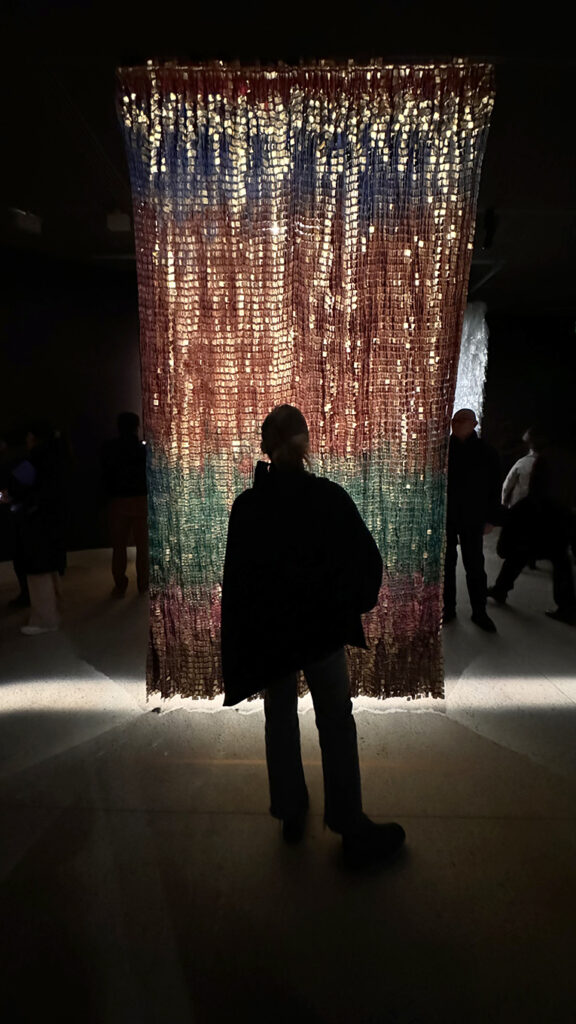

Het Herdefiniëren van Textielkunst
Olga de Amaral heeft een sleutelrol gespeeld in het herdefiniëren van textielkunst als een volwaardig en expressief medium binnen de hedendaagse kunst. Waar textiel lange tijd werd gezien als decoratief of functioneel ambacht, bevrijdde De Amaral het van deze beperkingen door het te benaderen als sculptuur, schilderkunst en architecturaal object in één.
Met het gebruik van materialen als gouddraad, paardenhaar, linnen en pigment, en door haar werken los te maken van het traditionele wandtapijtformaat, transformeert zij weefsel tot ruimtelijke, bijna spirituele ervaringen. Haar werk overstijgt het object en wordt een plaats van reflectie, stilte en transcendentie.
In plaats van textiel te reduceren tot techniek, benadrukt De Amaral de kracht ervan om betekenissen te dragen — over identiteit, geschiedenis, natuur en het onzegbare. Zo heeft zij niet alleen de grenzen van haar medium verlegd, maar ook bijgedragen aan een bredere herwaardering van textiel binnen het domein van de beeldende kunst.

De Poëzie van Materialen
In het werk van Olga de Amaral spreekt het materiaal een eigen taal — stil, maar krachtig. Voor haar zijn vezels, goud, pigmenten en texturen geen loutere bouwstenen, maar dragers van herinnering, betekenis en emotie. Elk materiaal dat zij kiest, draagt bij aan de sfeer en symboliek van het werk; het is een vorm van poëzie zonder woorden.
Haar gebruik van bladgoud bijvoorbeeld — dat zowel in religieuze iconografie als in Pre-Columbiaanse kunst diepgeworteld is — geeft haar werken een sacrale gloed, een gevoel van eeuwigheid en innerlijke reflectie. Het lijnenspel van geweven draad, de schaduwen die door lagen textiel vallen, en de tastbare gelaagdheid roepen een zintuiglijke ervaring op die verder gaat dan het visuele.
Door materialen met grote aandacht en respect te behandelen, weet De Amaral ze te verheffen tot spirituele entiteiten. In haar handen worden ze stem en stilte tegelijk — een poëtische taal die uitnodigt tot contemplatie, verwondering en verbinding.

Weven als Metafoor
Voor Olga de Amaral is weven veel meer dan een techniek — het is een diepgaande metafoor voor het menselijk bestaan. Elke draad die zij in haar werk verwerkt, staat symbool voor verbinding: tussen mensen, tussen tijden, tussen het materiële en het spirituele. Het repetitieve ritme van het weven weerspiegelt de cycli van het leven, de structuur van herinneringen, en de manier waarop identiteit wordt opgebouwd uit talloze lagen en invloeden.
Weven wordt bij De Amaral ook een daad van meditatie en bezinning. Het langzaam ontstaan van een werk uit losse draden belichaamt het proces van scheppen, van samenbrengen en ordenen — een subtiele maar krachtige reflectie op hoe betekenis en schoonheid vorm krijgen.
Bovendien fungeert het weefsel als grens én doorgang: het vangt licht en ruimte, maar laat ze ook door. In die zin is haar textielkunst een symbolische huid, die het innerlijke en het uiterlijke verbindt. Zo overstijgt het weven bij De Amaral het tastbare object en wordt het een poëtische taal voor de complexiteit van het mens-zijn.
Textiel als Taal
In het oeuvre van Olga de Amaral fungeren textiel en weefstructuren als een vorm van taal — een visuele en zintuiglijke manier van communiceren die buiten woorden treedt. Elke draad, elke knoop, elke laag pigment draagt een betekenis die niet in letters maar in textuur, kleur en ritme wordt uitgedrukt.
Voor De Amaral zijn textielen geen stille objecten, maar sprekende vormen. Ze vertellen verhalen over cultuur, vrouwelijkheid, spiritualiteit en verbondenheid met het land. Deze ‘taal van textiel’ put uit zowel persoonlijke herinneringen als collectieve tradities, vooral die van de Pre-Columbiaanse wereld, waarin textiel eeuwenlang werd gebruikt als communicatiemiddel — voor sociale status, kosmologie en ritueel.
In haar werk ontstaat een grammatica van vorm en materiaal: goud wordt symbool voor het heilige, linnen voor het aardse, het weefsel zelf voor de onderlinge verwevenheid van ervaringen. De Amaral laat zien dat textiel niet slechts een drager van decor is, maar een zelfstandig systeem van betekenisgeving.
Door textiel als taal te hanteren, nodigt zij de toeschouwer uit tot luisteren met de ogen — tot het lezen van stilte, het voelen van ritme, het verstaan van de onzegbare lagen van menselijke ervaring.


Amaral’s career and legacy
De carrière van Olga de Amaral beslaat meer dan zes decennia en wordt gekenmerkt door een voortdurende zoektocht naar de essentie van vorm, materiaal en betekenis. Sinds haar opleiding aan het Cranbrook Academy of Art in de Verenigde Staten in de jaren 1950, heeft ze zich onttrokken aan conventionele categorieën binnen de kunstwereld. Haar werk bevindt zich op het snijvlak van schilderkunst, beeldhouwkunst, architectuur en textiel, en heeft wereldwijd invloed uitgeoefend op de manier waarop we textielkunst begrijpen.


Amaral verwierf internationale erkenning door tentoonstellingen in toonaangevende musea zoals het Museum of Modern Art in New York, het Musée d’Art Moderne in Parijs en het Museo de Arte Moderno in Bogotá. Haar werk is opgenomen in belangrijke collecties over de hele wereld en heeft talloze kunstenaars beïnvloed, vooral vrouwelijke makers die op zoek zijn naar een balans tussen ambacht, identiteit en hedendaagse beeldtaal.
Haar nalatenschap ligt niet alleen in de objecten die zij creëerde, maar in de manier waarop zij de status van textiel binnen de kunst fundamenteel heeft veranderd. Ze bevrijdde het van zijn ondergeschikte positie en bewees dat het een krachtig medium is voor reflectie, spiritualiteit en intellectuele diepgang.
Olga de Amaral laat een erfgoed na dat blijft inspireren — een fluisterende maar blijvende stem in de wereld van de kunst, die ons eraan herinnert dat betekenis ook te vinden is in het ritme van een draad, in de stilte tussen de vezels, en in de gouden gloed van het tijdloze.

